

WHY THIS MATTERS
Everyone says: rest. The science says otherwise.
During pregnancy you hear the same thing from every direction - from family, from friends, from the internet: take care of yourself, rest, don't move too much. And you listen. After all, who would want to take a risk?
Yet the World Health Organization, the American College of Obstetricians and Gynecologists and dozens of independent studies say the opposite: regular exercise during pregnancy is not only safe - it's actively important for the health of both mother and baby.
The only problem is that no one told you exactly - what's allowed, what isn't, how much, when, and how it all changes week by week. Until now, when this guide was created.

WHAT'S IN THE GUIDE
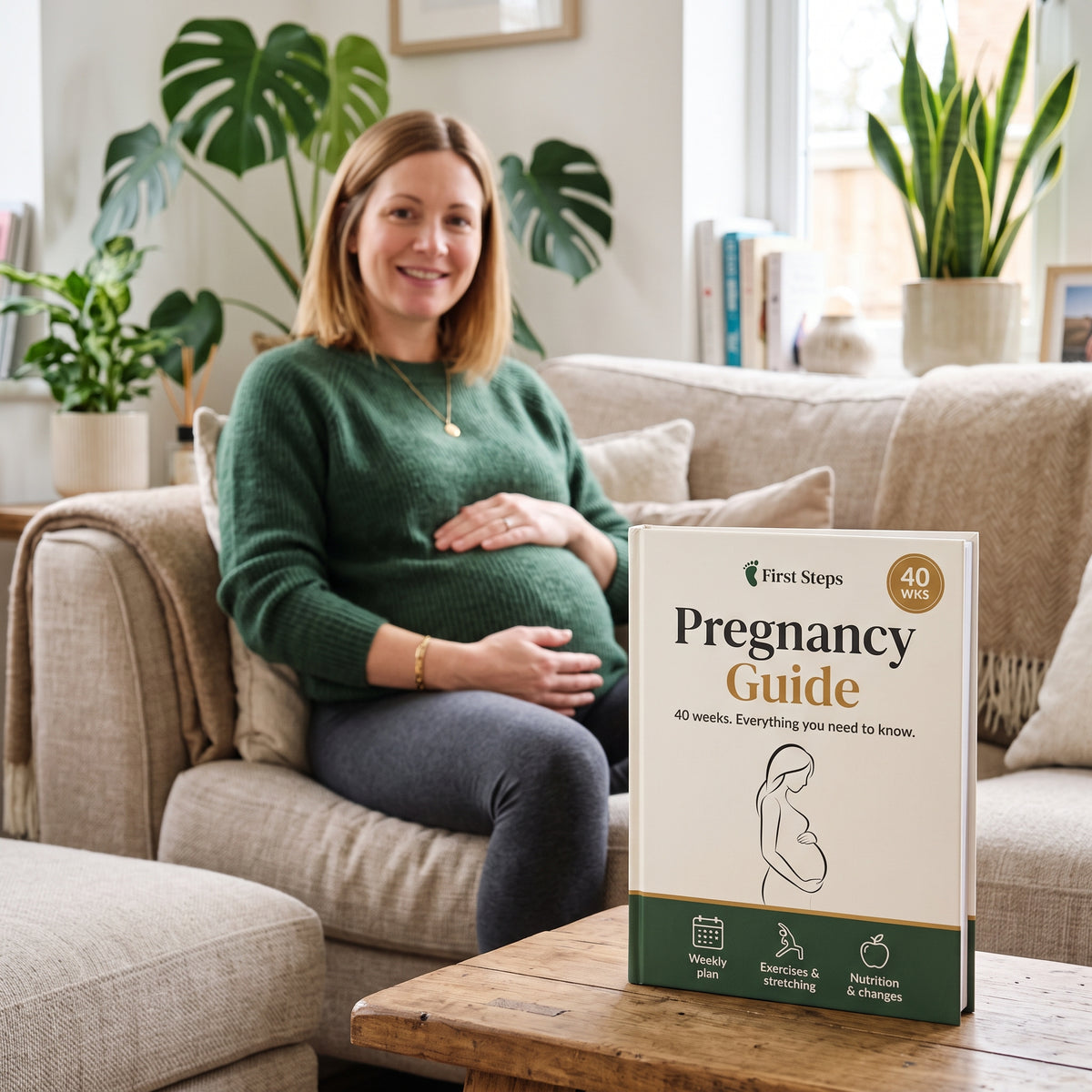
40 weeks. Everything you need to know.
A clear breakdown for every week: what's happening with you and your baby, which exercises are recommended, what to expect, and when to see your doctor.
Weekly plan
For all 40 weeks: what's happening with your baby, how your body is changing, which symptoms are normal, and which ones are worth seeing a doctor about.
Exercise
Exercises for every trimester - what's safe, what helps, what to avoid. Precise recommendations by week of pregnancy, not general advice.
Stretching exercises
Back, pelvic and leg stretches that ease the most common pregnancy aches - back, groin and leg pain, as well as that heavy feeling.
Nutrition and changes
What you need in each trimester, how your nutritional needs change, what to avoid and what to eat more of - with concrete examples, not abstract advice.
Pelvic floor exercises
Regular Kegel exercises and pelvic floor strengthening programmes - essential during pregnancy, for preparing for birth and for recovery afterwards.
Emotional preparation
Anxiety, mood swings, involving your partner, preparing for birth and motherhood - a topic that's rarely talked about, yet so important.
HOW THE GUIDE IS STRUCTURED
Three trimesters - three different stages
Every trimester brings new changes and new needs. The guide adapts right alongside you.
Adjusting and the basics
- How to manage nausea and fatigue
- Gentle movement from the very first week
- What to expect from your body - what's normal and what isn't
- Nutritional changes in the first trimester
- Starting your pelvic floor exercises
- Emotional ups and downs - why they happen
Activity and strengthening
- More active exercises - core, back, legs
- A stretching programme for back pain
- Your baby's movements - what to expect and when
- Nutritional needs as your baby grows
- Sleep and comfortable positions
- Emotional preparation for motherhood
Preparation and birth
- Exercise and movement in the final weeks
- Preparing your body for birth
- Breathing techniques for labour
- Hospital bag - checklist and plan
- Emotional preparation for birth
- The first weeks after birth
SCIENCE AND RESEARCH
Built on research, not forum comments
This guide was put together by physiotherapists, based on the recommendations of international professional bodies and scientific research. There are no internet myths or contradictory tips in it - only what the science says.
World Health Organization (WHO)
For a healthy pregnancy, it recommends at least 150 minutes of moderate-intensity aerobic activity per week. It's not movement that poses the risk - it's the lack of it.
American College of Obstetricians and Gynecologists (ACOG)
Exercise during pregnancy reduces the risk of gestational diabetes, high blood pressure and pre-eclampsia, and improves the course of labour. For a healthy pregnancy, there is no contraindication.
Cochrane review (2017)
Based on data from 56 studies and more than 19,000 women, regular exercise during pregnancy reduces the risk of gestational diabetes by 28% and of excessive weight gain by 30%.

WHO THIS GUIDE IS FOR
This guide is for you if...
IT'S FOR YOU
IT'S NOT FOR YOU
REVIEWS
What mums are saying
"Everyone told me to rest and take care of myself. This guide was the first to explain clearly what I could do and why it's good for me. I followed this plan for exercise throughout my whole pregnancy."
"The back pain started around week 20. The stretches in the guide really helped - after a week I felt so much better. I only wish I'd had it during my first pregnancy."
"For me, the birth-preparation section was the most valuable - the breathing techniques and the pelvic floor exercises. Labour went more easily than I expected. I can only recommend it."
